


Transformation of Data Centers in the Era of Artificial Intelligence
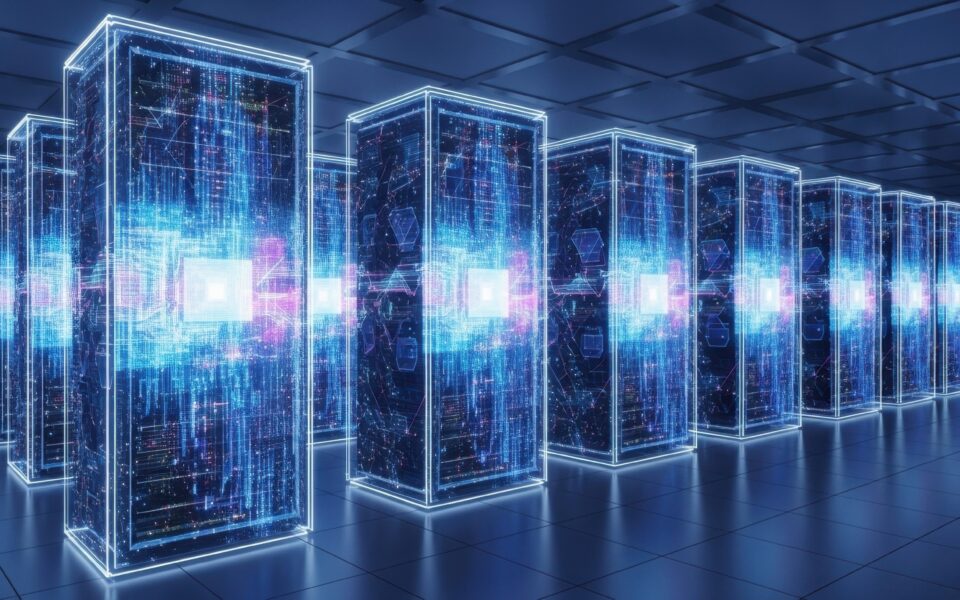
The Growth of Artificial Intelligence is transforming data centers – increasing energy consumption, introducing new cooling methods, and enabling AI-driven infrastructure management.
Data centers are the foundation of today’s digital infrastructure. Their core components include power supply systems, cooling systems, IT equipment (servers, networking, and data storage), as well as monitoring and management systems.
The strong growth of the data center market in Europe is directly linked to the development of artificial intelligence (AI), particularly generative models and machine learning systems. In addition to AI, further drivers of market growth include cloud services, digital transformation across industries, and regulatory requirements related to energy efficiency and digital sovereignty.
The increase in computational workloads, especially in AI applications, significantly impacts three key aspects of data center operations: electricity consumption, thermal load, and the need for advanced cooling methods.
Impact of Increasing Computational Loads on Energy Consumption
Traditional server racks in data centers typically consume around 7–10 kW, while AI server racks exceed 30 kW. In the latest AI data centers, power density can reach 100–300 kW per rack. This is due to the transition to specialized systems for parallel processing of large volumes of data, which generate significantly more heat. As a result, AI infrastructure is becoming one of the major energy consumers globally.
Thermal Load and the Evolution of Cooling Systems
Higher power density means more heat that must be removed. Traditional air cooling systems (CRAC/CRAH systems) are no longer sufficient for AI environments. Once density exceeds 30 kW per server rack, air cooling becomes inefficient. As it rises to 100 kW and beyond, a shift to new cooling methods becomes necessary, such as direct-to-chip cooling, immersion in dielectric fluids, hybrid systems with more efficient heat exchangers, and advanced control of coolant flow and thermal zones.
The transition to liquid cooling technologies enables more efficient heat transfer, more stable system operation, and reduced energy consumption.
Sustainability and Regulatory Market Requirements
The European regulatory framework increasingly emphasizes energy efficiency, CO₂ emission reduction, and data localization. The concept of a “sovereign cloud” and requirements for climate-neutral data center operations are driving the integration of renewable energy sources, advanced battery systems, and high-efficiency UPS (uninterruptible power supply) systems.
Artificial Intelligence in Cooling System Management
While artificial intelligence contributes to increased power density, electricity consumption, and the need for additional infrastructure capacity within data centers, it is simultaneously becoming a key tool for optimizing their operation. In other words, AI is not only the cause of increased load but also the solution for managing it efficiently.
The application of AI models is evolving from traditional monitoring to predictive and autonomous management. Machine learning algorithms analyze historical and real-time data to: predict thermal loads based on installed IT equipment, optimize the operation of fans and compressors, adjust coolant flow, reduce peak grid loads, and detect anomalies and potential failures before they occur. This leads to lower energy consumption, longer equipment lifespan, and improved system reliability.
In this context, the company ECCOS-INŽENJERING d.o.o., in cooperation with its partners, develops and implements solutions aligned with the concept of AI-driven data center infrastructure management. These solutions include the integration of advanced monitoring, analytics, and optimization systems for cooling operations, with proven application in real-world installations. Based on implemented projects, measurable energy savings and increased operational efficiency have been achieved, further confirming the value of applying AI models in managing HVAC infrastructure.
The application of AI in monitoring and management enables predictive and optimized real-time control of cooling systems. As a result, data centers are transforming from passive energy consumers into intelligent, adaptive, and sustainable systems ready to meet the demands of the AI era.